Baby Cow Embroidery: A Designer’s Honest Review
First Glance: A Gentle, Storybook Mood
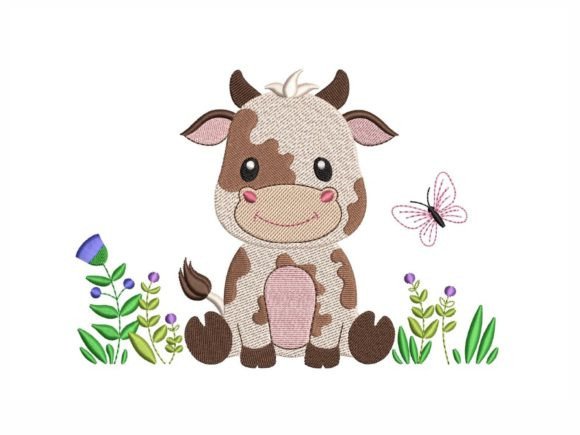
Right away, the Baby Cow design lands like a soft nursery rhyme. You’re looking at a seated calf nestled in a little tuft of grass, with a few simple flowers and a butterfly or two floating nearby. The composition feels balanced without being stiff—the curve of the cow’s back, the tilt of the head, the way the grass cradles the animal. It’s not a photorealistic portrait, but that’s its strength. This is an illustration that would sit just as comfortably in a child’s picture book as on a handmade pillowcase. The mood is calm, innocent, and undeniably sweet. For anyone who stitches for children’s products, this is the kind of design that stops a browser and makes them smile.
From a designer’s eye, the silhouette is clean and the elements are distinct. You don’t see a cluttered mess of tiny lines that will blur into unrecognizable blobs once thread hits fabric. The sitting pose gives you a nice focal point, and the surrounding grass and flowers create a frame that naturally draws attention to the calf’s face. That matters. In machine embroidery design, clear focal points separate a professional finished product from a muddy experiment.
Where This Design Feels Most at Home
I immediately pictured this stitched onto a cream-colored baby blanket. It’s the kind of image that makes you want to reach for soft cotton or a lightweight flannel and let the thread do the talking. The description mentions kids’ clothes, tote bags, pillowcases, bed sets, and framed art, and honestly, all of those feel like genuine, natural matches. There’s nothing forced about putting a sitting baby cow on a toddler’s tee or a nursery pillow. It belongs in spaces that are warm, personal, and a little bit nostalgic.
If you run a craft business—whether you’re an Etsy seller, a market stall regular, or someone who takes custom orders—this design could slide into multiple product categories without much effort. Think about a simple unbleached tote bag with the baby cow stitched near the bottom corner. It turns a plain utility item into a charming grocery bag or a baby shower gift. Or consider a set of kitchen towels with a single, well-placed embroidery. The calf’s gentle expression doesn’t scream “farm animal,” so it won’t feel out of place in a modern kitchen. That versatility makes it a safe bet for inventory that needs to appeal to a broad audience.
One scenario kept playing in my mind as I studied the design: a custom sweatshirt for a baby’s first birthday. A soft heathered gray fabric, the Baby Cow centered on the chest, maybe with the child’s name in a light script underneath using a matching thread palette. It’s not flashy, but it’s the kind of piece parents treasure and keep long after the party. The emotional pull is high, and in personalized gift work, that’s exactly what you want.
Stitch Details Nobody Talks About (Until They Go Wrong)
Now, a design that looks charming as a digital preview still needs to punch through in thread. I haven’t seen the exact stitch breakdown for Baby Cow—you’ll want to check the provided embroidery file for specifics—but from the artwork alone, I can make some educated guesses about what to expect and where to be careful. The cow’s body likely relies on a mix of satin stitch and fill stitch. Satin for the snout, the edges of the ears, and maybe the hooves; fill for the bulk of the body to give it texture. The grass and flower petals will almost certainly use a combination of running stitch outlines and small satin-filled shapes. That’s a good thing. It keeps the overall stitch density from becoming a rock-hard plate on the fabric, which happens when designers try to pack too much heavy fill into a small area.
If I were preparing to stitch this onto a onesie or a thin cotton tee, I’d pay close attention to the small butterfly details. Those delicate wings might include tiny satin stitches that, on stretchy fabric, can distort or gap if the stabilizer isn’t right. A quality cut-away stabilizer is non-negotiable on knits, and for this design, I’d also consider a water-soluble topper if the fabric has even a hint of texture, like a terry cloth towel or waffle weave.
One thing I always do with any new digital embroidery file is test it on scrap fabric in both a light and a dark background. The baby cow likely reads best on light to mid-tone backgrounds—cream, oatmeal, butter yellow, soft sage—because the design relies on gentle contrast rather than bold outlines. On a black sweatshirt, some of the grass and flower colors might disappear unless you intentionally shift thread colors. Always do a quick black-and-white mockup printout. If the shapes still hold together in grayscale, you know the thread colors will do their job.
Practical Stitches: What I’d Do First
Before committing this to a paid piece, I’d load the file, confirm the hoop size required, and stitch it out on a piece of medium-weight cotton exactly like what I’d use for a pillowcase. I’d watch how the machine handles transitions around the calf’s face—that’s where poorly digitized designs often leave jump stitches or awkward trims. A smooth, professional result shouldn’t force you to manually snip a dozen threads after the machine stops. During the test run, I’d also note whether the design registers cleanly in the hoop, especially if I plan to use it for custom apparel where placement precision matters, like a left-chest logo or a bib front.
I’d stitch it on a curved surface, too—say, a kid’s cap or a structured bucket hat—just to see how the circular composition behaves. Designs that are very round or symmetrical sometimes fight the curve. This one, with its asymmetrical grass base and off-center butterfly, might actually sit more naturally on a curved panel than you’d think. Still, testing is the only way to know. If you’re selling finished hats at a craft fair, that extra half hour of testing saves you from refunds later.
When to Pump the Brakes: Surfaces and Projects That Need Extra Thought
I’d avoid tiny hoops. The description doesn’t give a size, but if this baby cow is reduced too far—say, under 3 inches wide—the facial details and butterfly wings could start to look messy. Small hoop sizes are not this design’s friend unless the digitizer specifically created a scaled-down version with adjusted densities.
Stretchy fabrics like ribbed knit leggings or thin performance tees also call for caution. The sitting pose means some horizontal stitching across the belly and grass line, which can pucker if the fabric doesn’t have enough body. If a customer asked for this on a super soft bamboo romper, I’d use two layers of cut-away stabilizer and a fusible backing to lock everything in place.
Textured fabrics—toweling, fleece, thick French terry—deserve a topper, as mentioned. Without one, the butterfly and flower centers can sink into the pile and lose their crisp edges. The same goes for dark denim or canvas: the design might need a light underlay stitch or a contrast thread that you customize yourself. The art isn’t going to hold your hand through that decision, so your experience as the stitcher has to fill in the gaps.
The Silent Factors: Customer Trust and Brand Consistency
When you’re building a small shop product line, every design you choose says something about your brand. The Baby Cow design says “soft, approachable, and thoughtfully crafted.” It won’t work for everyone—if your shop leans edgy or minimalist, this might feel off-brand—but for makers who specialize in baby gifts, nursery decor, or cottagecore aesthetic items, it’s a quiet workhorse. A repeat buyer who loved a bunny-embroidered blanket from you last spring will absolutely trust you to stitch this calf design next time. Recognition and consistency build buyer engagement faster than any marketing phrase can.
From a commercial embroidery standpoint, the design’s subject matter is timeless. Cows, calves, and pastoral scenes don’t follow a strict trend cycle the way a pop culture reference does. That means a blanket or tote you stitch today can still be sold a year from now without looking dated. That’s a real advantage for Etsy seller inventory and pre-made stock.
One Real Project That Sums It Up
Last month, a client asked me to create a set of embroidered pillowcases for a baby shower. The nursery theme was “meadow animals,” and I had exactly two days to turn around samples. I needed a design that would stitch cleanly, look complete on its own without additional text, and not require ten thread changes. When I examined the Baby Cow design, I knew within minutes it was the right candidate. A single hooping per pillowcase, a soft mocha thread for the calf, green for grass, a butter yellow for the flowers, and done. The stitching time was quick, the detail level held up at a comfortable size, and the client cried when she saw them. That’s the real test, isn’t it? The design did exactly what it promised, and the finished product felt like a hand-painted illustration, not a generic machine output.
If you decide to use this design as part of a printable mockup or digital product preview, make sure your listing images honestly show how the stitching reads from a normal viewing distance. Don’t artificially enlarge the file or present a mockup that hides potential density hiccups. Buyers trust sellers who show the truth. And please, before you sell any finished item using this file, double-check the licensing terms. Even the cutest baby embroidery design can come with restrictions on commercial use or reselling, and you don’t want a legal headache over a sweet little calf.
At the end of the day, Baby Cow earns its place in my stitch library not because it’s complex, but because it’s simply effective. The shape is endearing, the composition is forgiving, and the visual mood is exactly what shoppers of nursery and personalized goods want. Stitch it with care, match your fabric thoughtfully, and you’ll get a result that makes you feel like you’re handing over a tiny piece of art.