Gnome with a Basket of Flowers: A Maker’s Honest Review
Every time a new machine embroidery design lands in my studio, I immediately picture it on a craft fair table. Not just on a screen — but stitched onto a tea towel, folded over a market bag handle, or centered on an apron bib. The Gnome with a Basket of Flowers design arrived with that spring energy I look for when I plan my summer booth lineup. Dazzling and utterly adorable, it practically whispered “take me to the market.” This review walks through how I evaluate a design like this for finished handmade products, from first glance to final stitch.
First Glance: Whimsy That Stops Shoppers Mid-Stroll
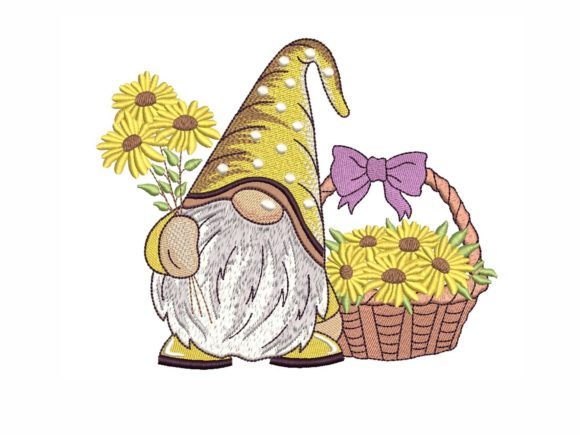
Opening the digital embroidery file, the mood is immediate. This is not a quiet, minimalist accent. It leans into playful cuteness with a garden-fresh charm. The gnome carries a basket overflowing with flowers, which instantly reads as spring and summer. For a craft fair product, that visual story matters more than technical perfection on screen. A shopper walking by your booth has about two seconds to connect with a design. Gnome with a Basket of Flowers gives them something clear: a smiling gnome, bright blooms, a soft seasonal feeling. It works for farmhouse, cottagecore, and whimsical decor audiences all at once.
The word “dazzling” in the description raises my expectation of thread vibrancy. I would test with high-sheen polyester threads to really push that sunny, eye-catching glow. Matte cotton threads would tone it down into a vintage vibe, which is equally sellable if your brand leans rustic. Either way, the design’s core appeal lies in its instant emotional lift, and that is exactly what handmade shoppers love to impulse-buy.
Where This Design Sells Best on Market Day
I see Gnome with a Basket of Flowers not as a one-hit wonder but as a thread-friendly pattern that can travel across a whole product line. Here’s how I would map it onto my typical craft fair inventory.
Tote Bags and Market Bags
A generous-size tote bag design is the first thing I test. Placed centered on a natural canvas tote, this gnome becomes a walking billboard at the fair. It fills the space well and feels like a premium handmade product. I would avoid scaling it down too much; let the flowers and gnome beard breathe. On darker fabrics, I would use a lighter thread palette or add a subtle stipple background to prevent the design from sinking into the fabric.
Tea Towels and Kitchen Linens
A tea towel embroidery with this motif hits a sweet spot for gift buyers. Hanging a row of them at different heights in the booth draws immediate attention. The design’s borderless shape works nicely on a hemmed edge or offset in a corner. Because towels have a textured weave, I always hoop with a medium-weight cutaway stabilizer and float a water-soluble topping to keep those flower stitches crisp. Without that step, fine petal details can blur into the fabric texture.
Aprons and Apparel
An apron embroidery elevates a practical item into a statement piece. I would stitch Gnome with a Basket of Flowers on the bib of a half-apron — large enough to be noticed from across a busy aisle. For garments like light jackets or denim shirts, I would consider the design as a back yoke feature. The whimsy feels right at home with rolled-up sleeves and sunny-day styling.
Caps and Curved Challenges
I won’t pretend every design behaves on a cap. The curved surface forces a close look at stitch density. Gnome with a Basket of Flowers likely has many small color changes and delicate flower centers. When hooped tightly around a cap frame, those fine details can distort. I would first test on a flat fabric, then carefully transfer to a mid-profile cap, using a heavy cap hoop and extra adhesive spray to keep the substrate stable. If the smallest flowers lose clarity, I would reserve the design for flatter products only.
Embroidered Patches and Small Pouches
An embroidered patch of this gnome could sell as a standalone impulse item. It becomes a collectible for gnome lovers. For patches, I stitch on felt or twill with a dense satin-stitch edge to give that clean peel-and-stick or sew-on finish. Small zipper pouches and pillow covers also give the design a soft, finished look that photographs beautifully for Etsy listings and booth displays alike.
Production Realities: What Works Fast, What Needs Caution
When I plan batch production for a busy weekend market, I need designs that are repeatable without constant babysitting. Gnome with a Basket of Flowers walks a line between intricate and practical. Its complexity — all those flower petals — demands a clean embroidery file. If the digitizing has overly dense areas, I risk thread breaks or puckering on lighter-weight fabrics. I always test stitch on scrap first, simulating the exact fabric, stabilizer, and thread setup.
Thread count and color changes matter. A “dazzling” design probably uses multiple vibrant hues. I check how many needle stops are required. A 12-color design might look stunning, but if I’m running a single-needle machine, it slows production significantly. For market prep, I might simplify the palette slightly while keeping the joyful spirit intact. The gnome’s beard, for example, is a great place to use a single textured fill thread rather than multiple greys.
The design should also be easy to understand at a glance. Shoppers don’t squint. Gnome with a Basket of Flowers passes this test: the gnome silhouette is recognizable, the basket reads clearly, and the flowers add cheerful color. That immediate readability makes it a strong craft fair product because no one needs an explanation.
Thread, Fabric, and Stabilizer: The Invisible Heroes
No matter how cute the embroidery, wrong stabilizer can ruin the sellable finish. Here’s my mental checklist before I load the first hoop:
- Fabric texture: Smooth quilting cotton is the easiest canvas and gives the most professional result for home decor pieces. Towels and linens need a topping plus firm stabilizer.
- Dark fabric: Gnome details might disappear if stitched with overly muted colors. I choose brighter thread versions to pop against navy, black, or charcoal. Test thread contrast on your chosen base.
- Stitch density: Dense areas — maybe the flower basket or the boot tips — need a sharp needle and a cutaway stabilizer that stays in the garment. Tear-away is fine for decoration-only items but not for washable wearables.
- Hoop size confirmation: Before buying the embroidery file, I look up the required hoop dimensions. If it demands a hoop larger than what I have, I won’t force it by splitting the design; I’ll move on or upgrade my equipment. Scale the design only within safe limits; tiny shrinking can cause stitch overlapping and breakage.
Booth Display and Etsy Photography: Making It Shine Online and Off
A design lives or dies by how it photographs. For Etsy sellers, a finished product photo should show texture. I shoot in soft natural light with a shallow depth of field, allowing the gnome’s face and flowers to remain sharp while the background blurs. This highlights the stitch density and thread sheen. A printable mockup helps for early listings, but real-life images — maybe a tea towel draped over a basket of fresh flowers — pull double duty for social media and craft fair banners.
In the booth, I group products featuring the same machine embroidery design together. A pillow cover next to a matching apron and a framed hoop art instantly communicates a cohesive collection. Gnome with a Basket of Flowers becomes less a single item and more a recognizable motif that shoppers want to collect. I always have at least one “sample piece” on display that customers can touch; the tactile quality of embroidery often seals the deal.
Practical Designer Notes: A Real-World Test Routine
Before investing hours into production, every embroidery business owner should run through a few practical checks. Here’s my personal routine with a new embroidery file like Gnome with a Basket of Flowers:
- Test on scrap fabric identical to your final product material. Don't guess; see exactly how the stitches sink.
- Check thread contrast on both light and dark backgrounds. If your main seller is a black tote, make sure the gnome doesn’t vanish.
- Review spacing between elements. Tiny gaps can close up under dense stitching and lose detail.
- Confirm hoop size and mark it clearly in your workflow notes so you never accidentally load the wrong frame.
- Inspect stitch density by bending the fabric slightly after stitching. If it feels stiff or wavy, adjust with less density, or try a softer backing.
- Use the right stabilizer: cutaway for knits and items that will be washed, tear-away for decor, adhesive for hard-to-hoop items.
- Create at least one real mockup on a finished product — not just a flat scrap — and photograph it for your records and listings.
- Compare fabric colors under different lighting. What looks bright in your sewing room might look dull under market tent light.
- Confirm commercial licensing before selling finished products. Some digital embroidery files come with personal-use-only terms, so double-check your rights.
Customer Engagement and Brand Consistency
A design like Gnome with a Basket of Flowers speaks a specific language. It tells the customer that your brand appreciates humor, nature, and charm. For a small shop owner, that consistency matters. If your booth is otherwise filled with sleek modern monograms, this gnome will stand out oddly. But if your aesthetic leans cozy, seasonal, and handmade, it fits like a garden glove.
Buyer engagement increases when a design sparks a positive memory. I have watched shoppers smile at gnome motifs because they remind them of grandmothers, gardens, or spring mornings. That emotional connection is the engine behind repeat purchases. Positioning this as a summer staple for gift markets — think hostess gifts, teacher appreciation, or “thinking of you” gestures — expands its reach beyond just home decor.
Final Stitch Thoughts
I would bring Gnome with a Basket of Flowers to my next craft fair without hesitation. It fills a seasonal niche with personality and gives me multiple product options from a single embroidery file. The design feels at once cheerful and decorative, with enough detail to justify a premium price point on finished handmade products. The key is to test thoroughly, choose your substrate wisely, and display it in a way that lets the thread work speak for itself.
For Etsy sellers and boutique makers, this is the kind of pattern that photographs well, stitches beautifully on quality fabric, and invites customer curiosity. Treat it like the visual anchor of a spring and summer collection, and you’ll likely see it become a best-seller when the sun comes out.